
- Your cart is empty Browse Shop
Project Information
Client:
Category:
Service:
Project
Date:
June 23, 2025
Location:
5 Talat Harb, Talat Harb St, Shebin El-Kom, Menoufia, Egypt
Grow the future with real soil.
Experience the Silva Tower — the vertical soil farming system redefining sustainable agriculture with up to 80% water savings and 100% natural growth.
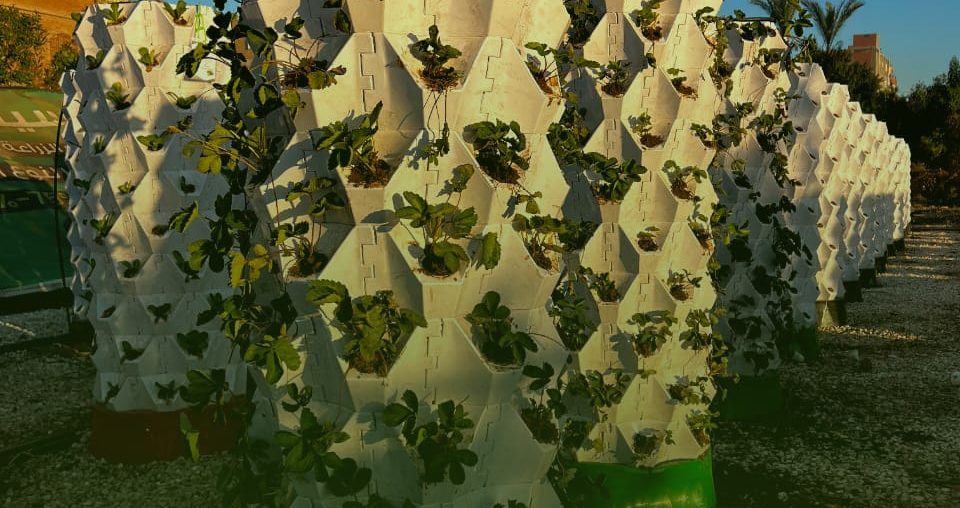
Silva Tower Vertical Soil Farming
Silva Tower is one of BioSelva’s pioneering innovations — a vertical farming system based on real soil, designed to maximize productivity in limited spaces while maintaining the authenticity and quality of traditional agriculture.
This system provides the perfect environment for controlled soil-based farming, ensuring consistent growth and healthy, chemical-free crops throughout the year. It allows urban and rural areas alike to enjoy sustainable food production using minimal land space.
Silva Tower combines the natural advantages of soil with modern engineering and digital monitoring technologies — achieving an eco-friendly farming solution that saves up to 80% of water consumption compared to traditional methods.
Project Challenge
Developing vertical farming systems that rely on soil — not hydroponics — required intensive research and innovation. The challenge was to ensure optimal airflow, irrigation balance, and root development within compact towers.
To achieve this, each Silva Tower was equipped with an intelligent internal irrigation system that precisely delivers water and nutrients to every soil layer. This smart system ensures even distribution, prevents waste, and maintains ideal growing conditions for all plants.
Through smart design and sensor-based monitoring, BioSelva succeeded in creating a system that maintains natural soil properties, ensures balanced moisture, and allows crops to grow naturally in a vertical structure.
- Take a Look at Our Agricultural Innovation
- Sustainable vertical soil farming systems
- Up to 80% water savings
- Continuous digital monitoring and control
Eco and Agriculture
Silva Tower represents a new chapter in sustainable agriculture — merging nature and technology to provide a cost-effective, scalable solution for future farming. With efficient space use, reduced environmental impact, and healthy production, it’s more than a system — it’s a step toward a greener future.